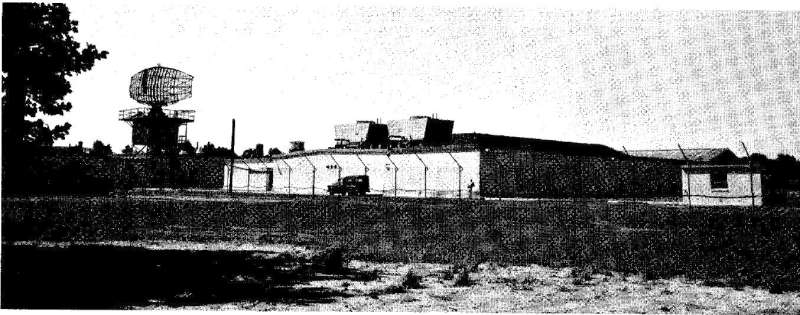
contributed by Tom Page
Those who are familiar with the very early history of the ADC "permanent" radar network know that, in the 1950s, New Jersey had two long-range radar stations, Highlands AFS (P-9) just south of New York City and Palermo AFS (P-54) near Atlantic City, plus one gap-filler radar site just east of Philadelphia. The 772nd AC&W Squadron at that time was attending a long-range radar station known as Claysburg AFS on top of Blue Knob, a mountain in southwest central Pennsylvania, south-southwest of Altoona. So, how was it that a new long-range radar station was activated at Gibbsboro, NJ, in 1961, and why did the 772nd AC&W Squadron relocate there? This short tome answers those questions, and throws in a little related trivia as well.
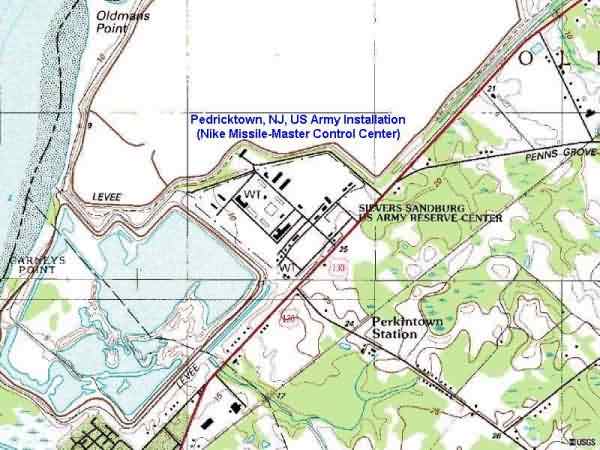
In the early 1950s, the U.S. Army was assigned responsibility for the point protection of major American cities, industrial centers, and certain Air Force SAC bomber bases. By the mid 1950s, the primary air-defense weapon was the Nike Ajax missile, later supplemented by or replaced by more-capable Nike Hercules missiles. For greater effectiveness, in the late 1950s the Army developed computerized command-and-control facilities known as Nike "Missile Masters" using AN/FSG-1 computer systems which were similar to (and interacted with) the Air Force SAGE direction centers. Ten (10) Missile Master sites total were built. One such Missile Master control center was constructed at the Pedricktown Army Installation (Nike site PH-64DC) in southwestern New Jersey to control the Nike missile firing batteries encircling the greater Philadelphia metropolitan area. Pedricktown was at sea level, so a site with higher elevation was desired. The Air Force gap-filler annex at Gibbsboro, NJ, was selected as the site for a new prime joint-use long-range radar station. However, an AN/FPS-20 series search radar for Gibbsboro was not available at the time. So, temporary radars, on loan from TAC, were set up at Pedricktown in the interim in support of Missile Master operations.
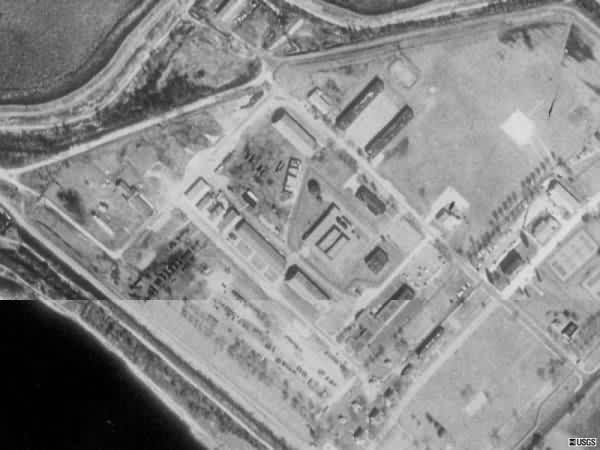
One AN/GPS-3 (FPS-8 variant) search radar and one AN/MPS-14 (mobile AN/FPS-6 variant) height-finder radar, both on open (temperate) steel towers, were installed at Pedricktown. (The AN/GPS-3 search radar is seen in the vintage photo, above.) When the Gibbsboro radars were up and running, the two radars at Pedricktown were removed and returned to TAC.
Note: For budgetary reasons, Congress had earlier directed the Army and the Air Force (as well as the other services) to combine radar sites where missions allowed. Thus, the Air Force was required to close an existing radar station, so it chose its inland prime long-range radar station at Claysburg AFS, PA (P-63). The assigned 772nd Radar Squadron (SAGE) was moved to Gibbsboro in 1961/1962. To provide low-altitude radar coverage in southwest central Pennsylvania, Air Force plans called for the Claysburg site to become a gap-filler annex; however, it was never activated as such. Also, once the Air Force assumed control over the Gibbsboro long-range radar site, the P-9A gap-filler there was deactivated.
At the time of the Pedricktown Missile-Master activation, the Air Force had other existing long-range radar coverage in southeastern New Jersey from its coastal Palermo AFS site (P-54). The new plan was to close the Palermo AFS radar site, convert it into a gap-filler annex, and relocate its AC&W radar squadron to Fort Meade, MD, to support the Missile Master there. The prime long-range radars at Gibbsboro AFS and those on the off-shore radar platform known as Texas Tower No. 4 (TT-4), along with the planned gap-filler radar at Palermo, then would provide adequate coverage for that region. The 770th AC&W Radar Squadron at Palermo AFS indeed was relocated to Fort Meade as planned. However, on 15 Jan 1961, TT-4 tragically collapsed in a fierce storm with the loss of all 28 personnel and equipment. The Air Force then decided to retain the AN/FPS-20 search radar at Palermo, and cancelled plans for the gap-filler. Palermo AFS re-opened a year later with a new radar squadron, the 680th (originally located at Yaak AFS, MT). Then, for several years, the tiny state of New Jersey had three prime long-range radar sites: Palermo AFS, Gibbsboro AFS, and Highlands AFS. Palermo AFS remained in operation until 1970 when it shut down. Highlands AFS was transferred to the Army in 1966, and remained in operation supporting the combined New York - Philadelphia Defense Area until 1974 when it was closed for good.
At Gibbsboro AFS, as at other Missile-Master radar installations, the search radar was shared with both services. The initial search radar was an AN/FPS-66 (AN/FPS-20 variant) model under a radome. Each service had two dedicated height-finder radars, type AN/FPS-6(A) plus an Air Force AN/FPS-26A, for a total of four. The two Army AN/FPS-6A height-finder radars were later removed when the Pedricktown Missile Master was deactivated circa 1965. In 1963, the AN/FPS-66 search radar was replaced by an AN/FPS-27 FD search radar.
Housing, cantonment, and administration for Gibbsboro AFS continued to be at the Pedricktown Army Installation until the Pedricktown Missile Master was deactivated in 1965. (The only on-site housing at Gibbsboro AFS was a trailer park). Then, housing and administration were transferred to McGuire AFB, NJ. Circa 1974, Gibbsboro AFS inherited the former Nike housing area near Sicklerville, NJ.
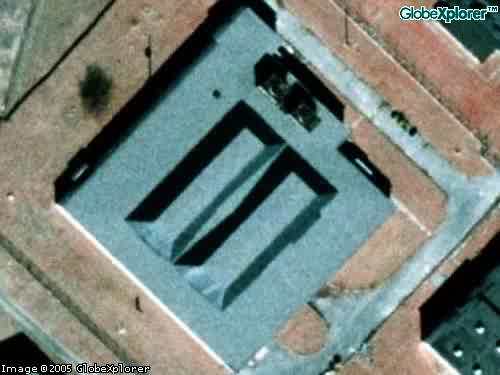
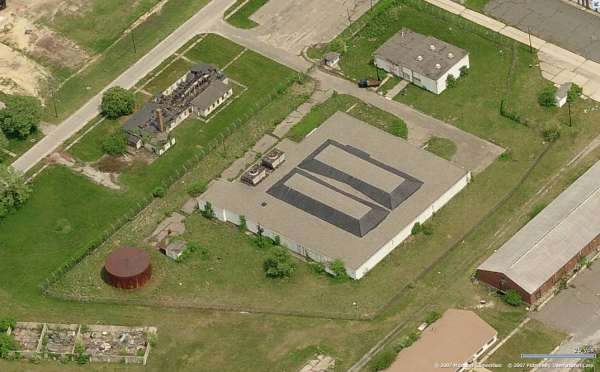
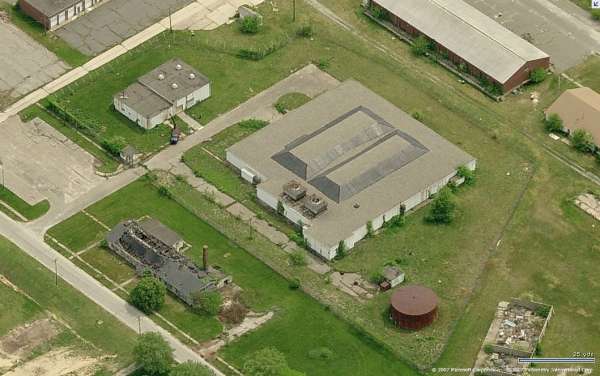
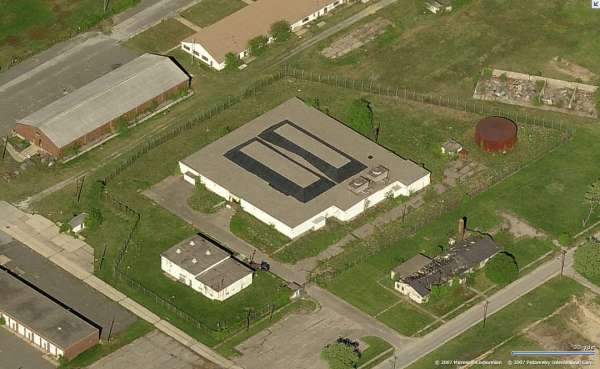
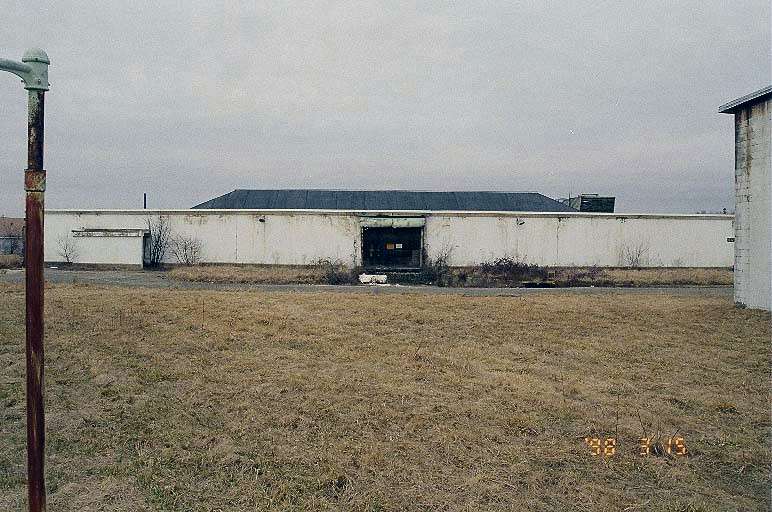 Found at http://www.uer.ca/forum_showthread.asp?fid=1&threadid=84252 The fomer Nike Missile-Master blockhouse itself. Seen is the MM building`s southeast side; the view is looking northwest.
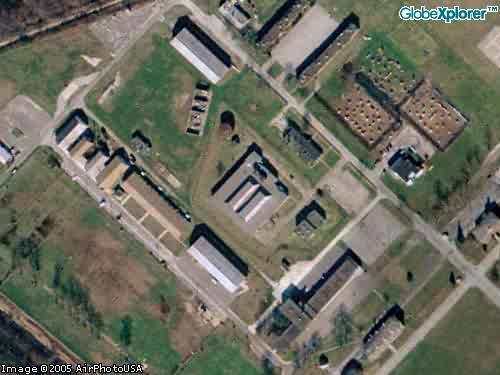
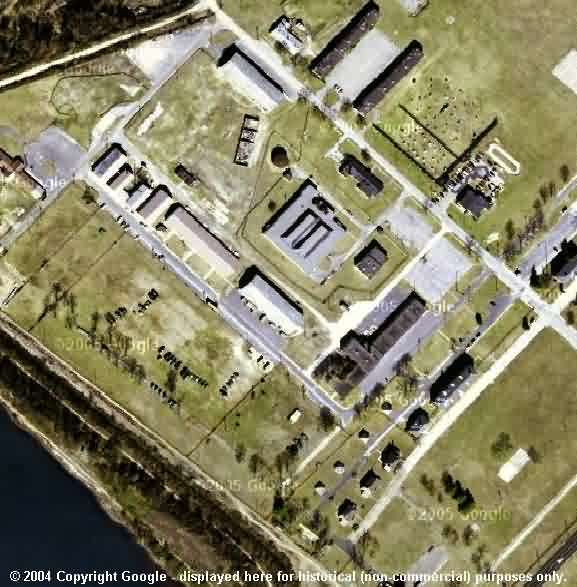
The former Pedricktown Nike Missile-Master site can be viewed at http://terraserver-usa.com/image.aspx?S=10&T=1&X=2307&Y=22002&Z=18&W=2, and aerial images are shown below.
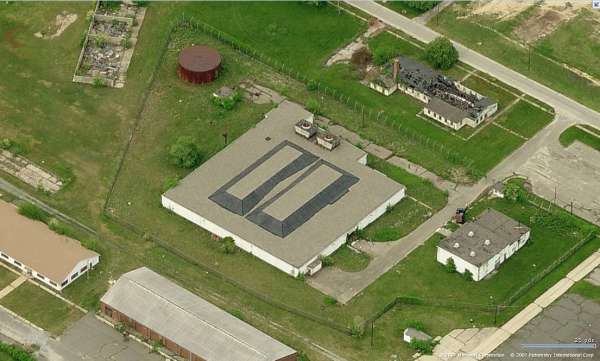
Looking North
Looking East
Looking South
Looking West